
"Repetition does not transform a lie into a truth"
Franklin D. Roosevelt
Trump Administration's targeting of the Southern Poverty Law Centre ignites far right conspiracysphere
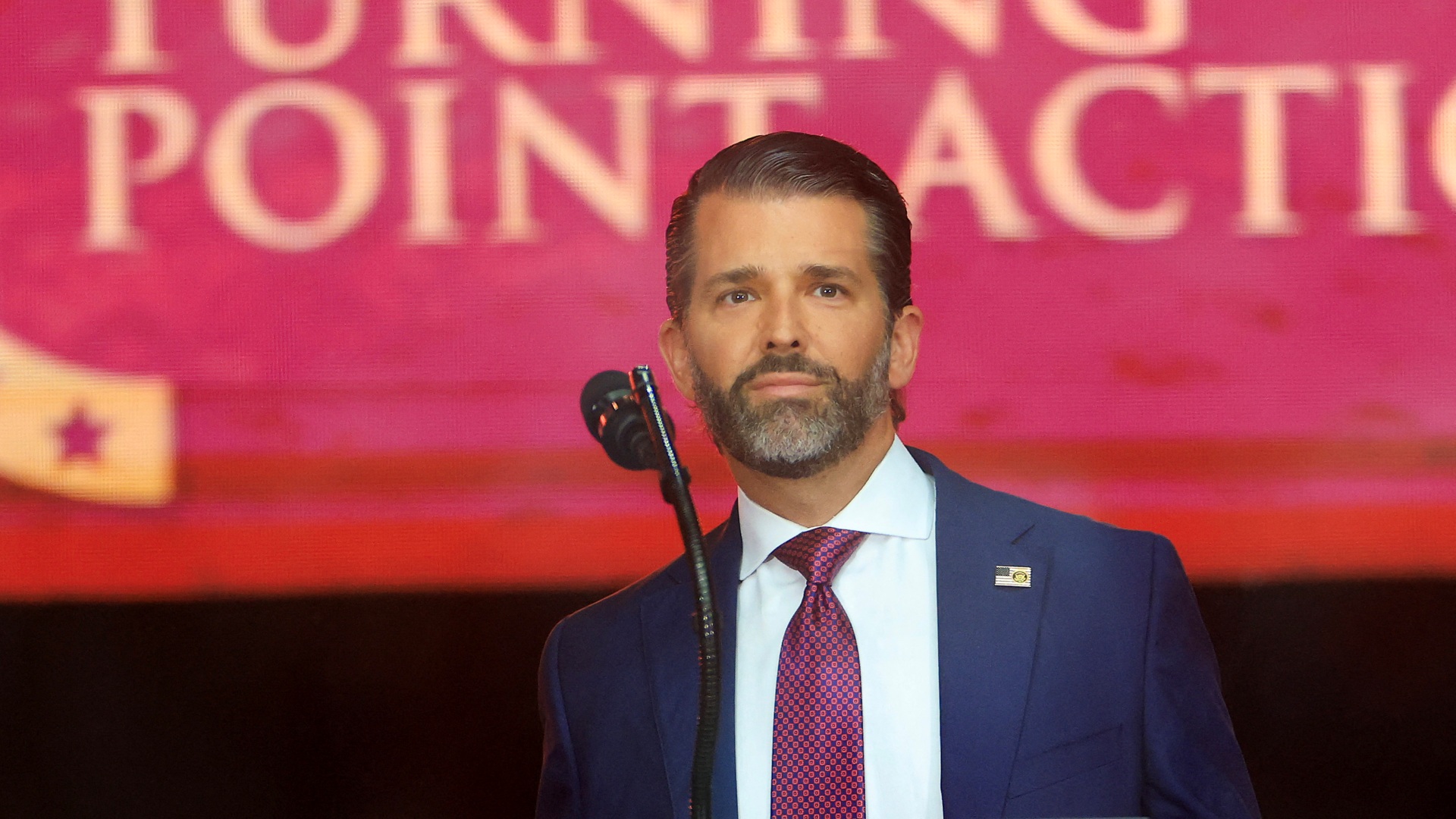
“LOL, what a plot twist that SPLC was funding the KKK… as Democrats always have. Another “conspiracy theory” coming true in real time.”
It was with this gleeful message, posted on X, that Donald Trump Jr. reacted to the indictment of the Southern Poverty Law Center (SPLC), one of the leading American organizations monitoring the far right and hate groups.
“The SPLC was a 501(c)(3) nonprofit—which in Democrat language just means it was a perfect vehicle for fraud and fueling hate hoaxes against conservatives,” he proclaimed in another post, urging his followers to tune in to his “full investigation tonight 6 pm ET on my Triggered podcast—see you there!!!”.
In just a few messages, the U.S. president’s son offered his 16 million followers a completely distorted version of the case: that the SPLC financed the entirety of the white supremacist organization the Ku Klux Klan, that it was engaged in a conspiracy against conservatives, and that conspiracy theorists were once again right before everyone else.
A galaxy of pro-MAGA figures joined in with Trump Jr., seizing on the revelation that the SPLC had paid an undercover operative who was present at the neo-Nazi “Unite the Right” march in Charlottesville in August 2017. Three people died in the violence, including Heather Heyer, killed when a neo-Nazi extremist drove his car into a group of counter-protesters.
“We now know Charlottesville was a complete hoax from top to bottom,” declared MAGA influencer Jack Posobiec on X.
For MAGA personality Priya Patel, the indictment confirmed a panoply of conspiracies against the right: “Charlottesville was a Leftist psyop. I would bet all the money I have that we confirm, once and for all, that January 6th was also a psyop.”
But as reported by The Bulwark, the indictment says only that “the individual received $270,000 from the SPLC between 2015 and 2023 and that they participated in the march and played some ill-defined organizing role.”
On Tuesday, April 21, the U.S. Department of Justice announced the indictment of the SPLC on charges of wire fraud, false statements to a federally insured bank, and money laundering. According to the federal indictment, the organization allegedly diverted donations to secretly fund white supremacist and neo-Nazi groups. Between 2014 and 2023, the SPLC is said to have paid more than $3 million to individuals linked to the KKK, Aryan Nations, or the National Socialist Movement. To do so, fictitious entities and concealed bank accounts were allegedly used. According to the Department, these payments were hidden from donors, who believed they were funding the fight against violent extremism.
🚨HAPPENING NOW: Justice Department announces indictment against Southern Poverty Law Center ("SPLC"). Our indictment alleges SPLC secretly funneled MORE THAN $3 MILLION in funds to members of white supremacist and extremist groups. pic.twitter.com/Ifpda94f7D
— U.S. Department of Justice (@TheJusticeDept) April 21, 2026
These allegations are serious and call for precise answers from the SPLC, particularly regarding how these payments were decided and monitored. Money paid to a racist activist, even in the context of informant work, remains money. If it helps sustain a network, facilitate travel, strengthen internal standing, or increase an activist’s influence, it cannot simply be brushed aside.
The SPLC’s arguments must also be heard. The anti-racist organization categorically denies having “funded the KKK” and rejects these “false allegations.” It maintains that the funds in question were used to pay informants embedded within violent groups in order to document their activities and identify threats. According to the SPLC, its now-discontinued informant program helped save lives and was kept secret to protect sources. Information gathered was often shared with local and federal law enforcement.
Clearly, the case deserves more than the flippant tweet of a president’s son who has, for years, aligned himself with the extreme right. The questions it raises are serious: how far can one go in infiltrating organizations to prevent acts of violence? At what point does paying a source become a form of material support? How can the protection of informants be reconciled with transparency toward donors?
It will be up to the courts to determine the SPLC’s role, but former federal prosecutors are already seeing flaws in the legal arguments of the indictment. CBS News reported remarks by former federal civil rights prosecutor and FBI agent Kyle Boynton: “I don't think any prosecutor with white-collar experience would look at this indictment and believe it makes out the elements of a crime. It’s not a valid indictment.”
In the meantime, it is worth recalling that this long-established civil rights organization, founded in 1971 in Montgomery, Alabama, and focused on the struggle for voting rights, and against white supremacist groups, has for years been in the crosshairs of Trump supporters, who accuse it of labeling conservative and far right groups as “hate groups.” Legitimate criticisms have also been leveled at SPLC for turning a blind eye to Islamist antisemitism and extremism and even embracing and partnering with groups like CAIR, Council on American Islamic Relations, closely identified with the Muslim Brotherhood. The indictment comes amid a broader offensive against civil society actors that have fallen out of favor with those in power, including threats against George Soros’s Open Society Foundations and the Anti-Defamation League (ADL). Last October the SPLC and the ADL had their long-standing partnerships with the agency in the fight against extremism cancelled, with Patel dismissing the SPLC as a “partisan smear machine.”
Already, the loaded comments of the Trump administration’s acting attorney general, Todd Blanche—who claimed that “the SPLC is manufacturing racism to justify its existence”—suggest an agenda that goes well beyond the specific claims in the indictment. Blanche added that the Department of Justice “will hold the SPLC and every other fraudulent organization operating with the same deceptive playbook accountable,” suggesting this is part of a broader, previously signaled campaign targeting other progressive non-governmental organizations.
A context entirely ignored by Donald Trump Jr.’s tweet, which goes so far as to claim that Democrats have “always” funded the KKK. This revisionist claim contains a small kernel of truth: in the 19th century, the Southern wing of the Democratic Party was indeed the main defender of slaveholding interests in the American South. After the Civil War and the abolition of slavery, it remained, until the mid-20th century, the principal defender of racial segregation. But it was also the Democratic Party that, in the 1960s, backed desegregation and the civil rights movement—at which point many Southern Democratic voters, opposed to these changes, shifted toward the Republican Party.
So are we really witnessing a conspiracy theory becoming “true” before our eyes? In the worldview promoted by Donald Trump Jr., anti-racist organizations supposedly foster racism deliberately—which, in his view, barely exists except when it targets white people—in order to justify their own existence, profiting from the very phenomena they claim to fight, even to the point of manufacturing the threats they denounce. It is a familiar refrain, one that echoes the accusations Conspiracy Watch faced when it published its first opinion surveys measuring conspiracism in France. It bears repeating: this kind of accusatory reversal is one of the most reliable hallmarks of populism.
If the SPLC committed offenses, it must answer for them. And if the Trump administration is instrumentalizing the justice system to intimidate an organization whose work it finds inconvenient, that too must be said.
For sixteen years, Conspiracy Watch has been diligently spreading awareness about the perils of conspiracy theories through real-time monitoring and insightful analyses. To keep our mission alive, we rely on the critical support of our readers.