
"Repetition does not transform a lie into a truth"
Franklin D. Roosevelt
Swiss author built a global career on a scientifically discredited theory claiming extraterrestrials shaped ancient human civilisation
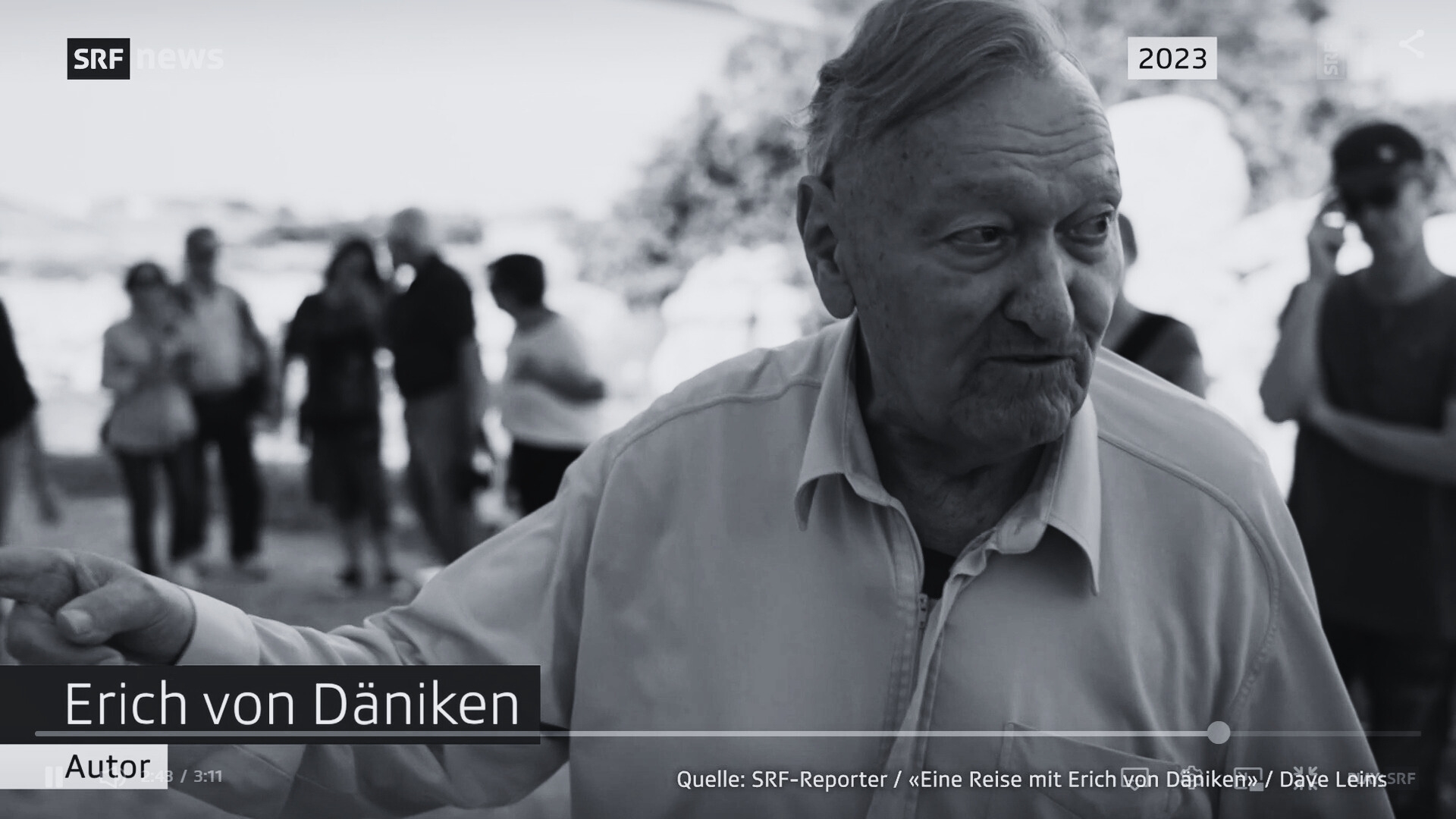
Rejected by historians, scientists and archaeologists but embraced by millions of readers, Erich von Däniken has died at 90. He became one of the most commercially successful purveyors of pseudo-archaeology and paranormal speculation of the late 20th century, reaching the height of his influence in the late 1960s and 1970s.
At the peak of his fame, von Däniken’s ideas helped establish a narrative framework in which ancient history is reimagined as the residue of extraterrestrial intervention. Variations on this theme appeared in films such as Close Encounters of the Third Kind, Ridley Scott's Prometheus, the Indiana Jones franchise — most clearly in Indiana Jones and the Kingdom of the Crystal Skull — and Stargate, which reworked ancient Egyptian mythology as misunderstood alien technology.
On television, his influence extended from the 1970s documentary series In Search of…, narrated by Startrek’s Leonard Nimoy, which brought ancient-astronaut and paranormal speculation into prime-time broadcasting, to The X-Files, with its mythology of hidden truths, ancient texts and secret elites. Decades later, Ancient Aliens transformed von Däniken’s thesis into an endlessly recyclable television format, largely stripped of any critical distance.
Von Däniken popularised what became known as the “ancient astronauts” theory: the claim that beings from outer space visited Earth in antiquity, transmitted advanced knowledge and technology to early civilisations, and were later worshipped as gods. According to this narrative, major monuments and artefacts — from the pyramids of Giza and Stonehenge to the Nazca Lines — were beyond the capabilities of ancient peoples and therefore constituted evidence of alien intervention.
This knowledge, he argued, had not merely been forgotten but deliberately hidden over centuries by political, scientific and, above all, religious elites. Von Däniken was firmly convinced that extraterrestrials “still live among us today”. He even claimed that secret agreements had been concluded between aliens and humans governing their activities on Earth. On climate change, he advanced one of the most idiosyncratic forms of denial on record, attributing rising temperatures not to human activity but to extraterrestrial influence.
A tireless promoter of this worldview for more than half a century, von Däniken died on Saturday 10 January in a hospital in central Switzerland.
His breakthrough came in 1968 with the publication of Chariots of the Gods?, released at a moment when the space race, the imminent Moon landings and countercultural distrust of authority were reshaping public attitudes toward science and history. Translated into more than 30 languages, the book became an international sensation. Its English-language success turned von Däniken into Switzerland’s best-selling author, with nearly 70 million copies sold worldwide.
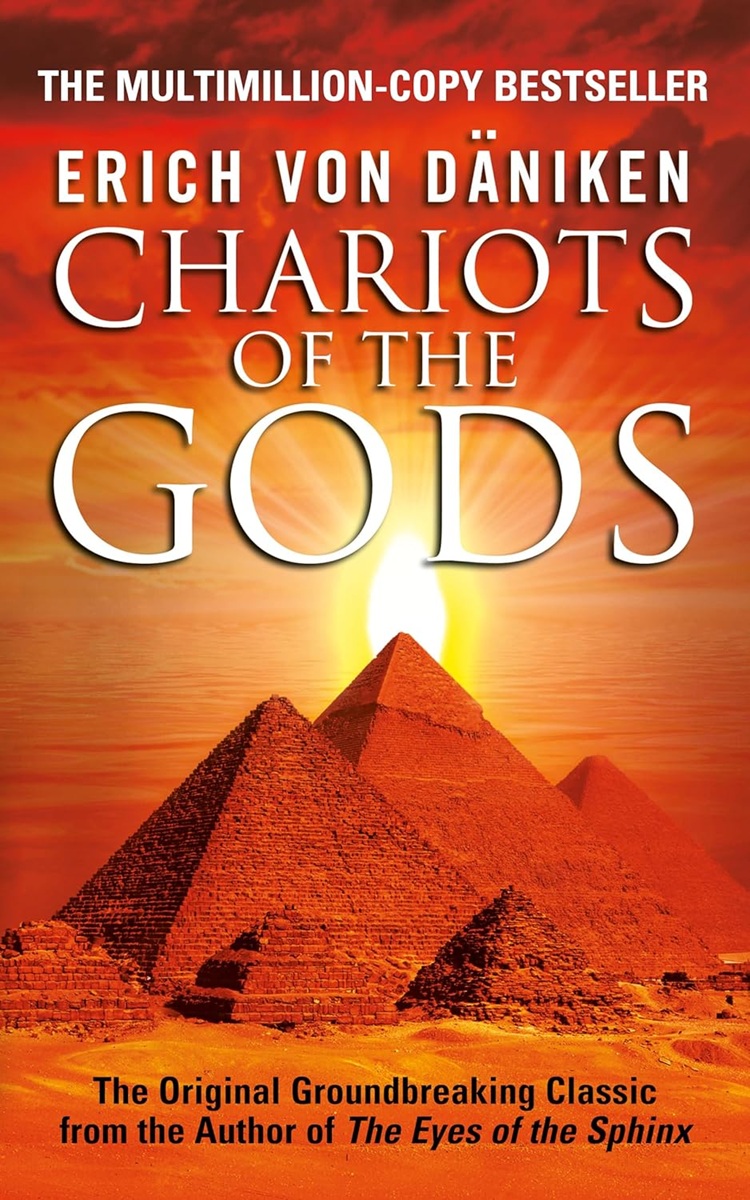
The achievement was all the more striking given his lack of academic training in archaeology or history. His original manuscript drew heavily — and without acknowledgement — on earlier esoteric works such as The Morning of the Magicians by Louis Pauwels and Jacques Bergier, as well as the books of Robert Charroux, and had to be extensively rewritten by a professional journalist before publication.
The scientific response was swift and devastating. Archaeologists, historians and physicists dismantled his claims repeatedly, pointing to fabricated evidence, elementary misreadings of ancient sources and a method that substituted suggestion for proof. The astronomer Carl Sagan, while open to the scientific search for extraterrestrial life, warned that von Däniken’s work exemplified how wonder detached from evidence could seriously mislead the public.
His personal life was as erratic as his theories. Born in 1935 in Schaffhausen, the son of a clothing manufacturer, von Däniken rebelled early against strict Catholic schooling, developing alternative origin stories to the biblical account of creation. After leaving school, he worked in the hospitality industry and was repeatedly convicted of fraud and financial misconduct, serving several prison sentences — including after the commercial success of his first book.
Yet his popularity barely suffered. Even after admitting in a 1978 interview that he had fabricated evidence — commissioning modern artefacts presented as ancient depictions of UFOs — von Däniken continued to sell hundreds of thousands of books each year. In 2003, he opened a theme park in the Swiss Alps devoted entirely to his theories.
In 1991, he became the first recipient of the Ig Nobel Prize for literature, awarded for work that “first makes people laugh, and then makes them think” — an accolade that neatly captured the paradox of his career.
By the 1980s, von Däniken’s prominence in the English-speaking world was waning. Yet the ideas he popularised proved remarkably resilient. They resurfaced in waves of semi-serious archaeological documentaries and later migrated into online conspiracy ecosystems, where distrust of institutions and fascination with hidden knowledge continue to thrive.
Last spring, citing declining health, von Däniken announced he was scaling back his activities. His convictions, however, remained unchanged. “For me, there is no doubt that extraterrestrials exist,” he said shortly before his death. “The only question is why they make it so difficult for us to prove it.”
The answer, his critics would argue, lies not in a cosmic conspiracy but in the absence of evidence. Scientifically hollow, Erich von Däniken nonetheless succeeded in something very real: he supplied modern mass culture with a reusable myth — one that continues to animate films, television and conspiracy thinking long after the case against it became overwhelming.
For sixteen years, Conspiracy Watch has been diligently spreading awareness about the perils of conspiracy theories through real-time monitoring and insightful analyses. To keep our mission alive, we rely on the critical support of our readers.