"Repetition does not transform a lie into a truth"
Franklin D. Roosevelt
How ‘intellectual’ Antizionism morphs into an antisemitic repertoire of hidden elites, money, blackmail, and manipulation
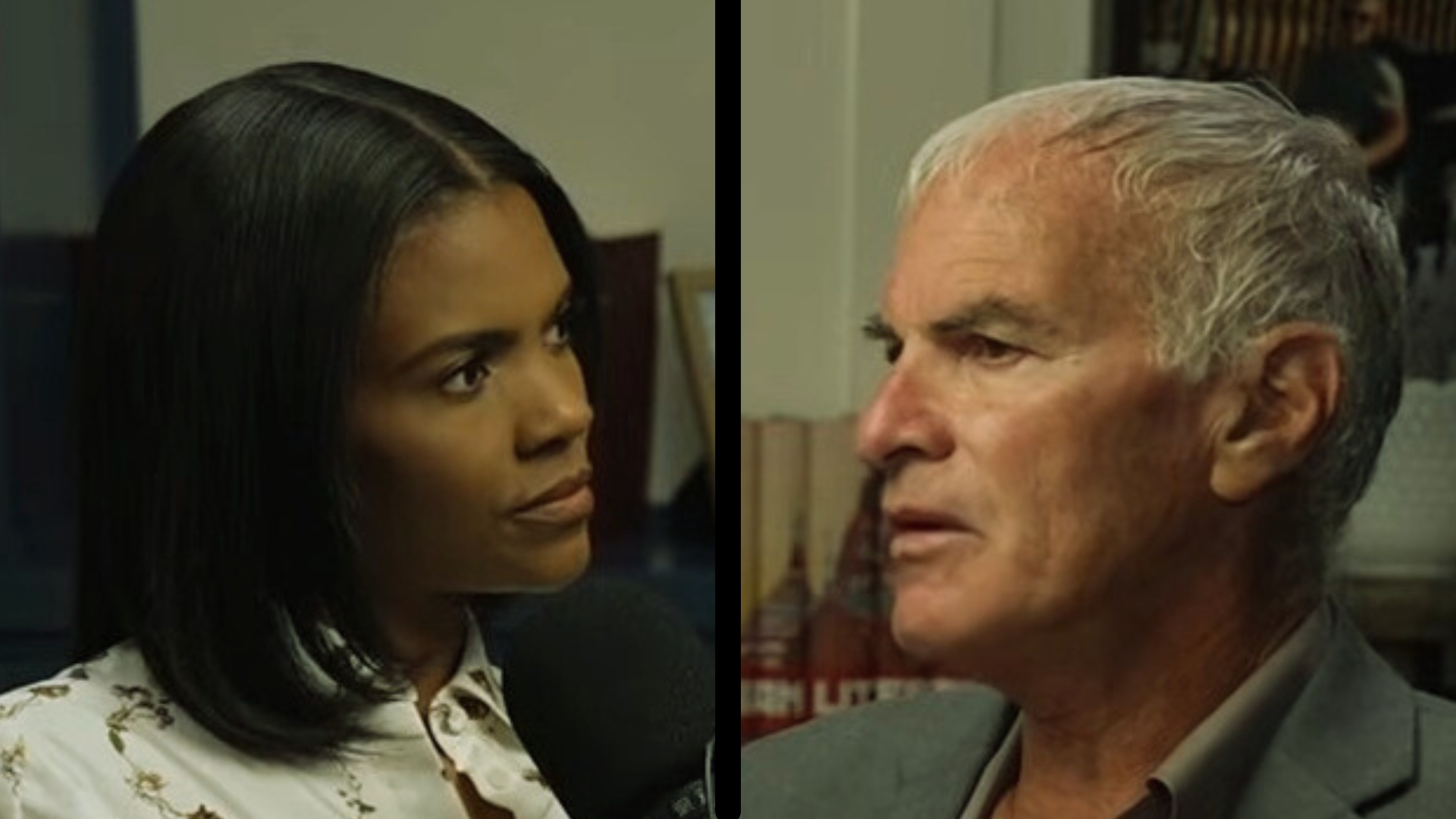
When Candace Owens uploaded a lengthy interview with Norman G. Finkelstein to her YouTube channel, she presented as a conversation about Israel, the Holocaust, and the upcoming release of his book Gaza’s Gravediggers. The exchange was also distributed in podcast format, further expanding its reach.
But this was not a confidential academic debate. Owens’ YouTube channel has nearly 5 million subscribers. Three months after its publication in November 2025, the video had already surpassed 2.3 million views. We are not dealing with a marginal dialogue between a far right hate influencer and an intellectual but with highly amplified content capable of shaping historical representations and political interpretive frameworks for a mass audience.
The stakes are therefore not anecdotal. They are cultural, ideological, and strategic.
The episode was marketed as a clash of camps: she, an outspoken figure of the American radical right; he, an intellectual from the antizionist left who claims a Trotskyist trajectory. But far from ideological disagreement, the interview stages an explicit convergence around Gaza, the denunciation of Zionism, and above all, a particularly incendiary motif: “the Holocaust industry.” This is not incidental. It is a bridge.
It must be stated at the outset that Norman Finkelstein is not a “neutral” academic intervening sporadically in this debate. The son of survivors, he rose to prominence in 2000 with The Holocaust Industry, a book denouncing the political and financial use of Holocaust memory by certain Jewish organizations. The book generated intense controversy, with some historians viewing it as a contemporary reprise of dangerous argumentative patterns.
Owens is no mere conservative commentator. She operates within a conspiratorial ecosystem structured around transgression, insinuation, and permanent dramatization. In 2025, Emmanuel and Brigitte Macron filed a defamation lawsuit against her in the United States following her claims that Brigitte Macron had been born male. This context is not peripheral: it underscores that the interview belongs to an audience-capture strategy based on systematically fueling doubt and the manufacture of suspicion.
Let us set aside here the accusation of “genocide” in Gaza, repeatedly asserted in the interview as an established fact. To date, no international court has concluded that a genocide has occurred. The International Court of Justice has acknowledged the plausibility of certain allegations in the context of provisional measures but has not ruled on the merits. The legal qualification of genocide remains unsettled. Several analyses by experts in the law of armed conflict and military strategy have also emphasized that Israeli operations are subject to highly structured internal legal procedures aimed at minimizing collateral damage—debates we have documented elsewhere and to which we refer readers.
The use of the term “genocide” in this context, therefore, constitutes a political and activist qualification, not a judicial finding. It is precisely this maximal dramatization—transforming an accusation into moral certainty—that structures the rhetoric of the interview.
The segment devoted to the Holocaust (1:32:39) is central.
Owens immediately adopts a classic “soft denial” framing: the Holocaust would be an “untouchable,” “protected” domain in which questions are forbidden. This rhetorical move is well known: it transforms one of the most extensively documented historical fields in the world into dogmatic taboo, thereby recasting her challenging of established facts as intellectual courage.
She then moves to the conspiratorial narrative surrounding Miklós Grüner and Elie Wiesel: Wiesel allegedly “stole” the identity of a survivor, and more broadly, powerful individuals allegedly appropriated the identities and testimonies of deceased deportees. This marginal accusation has circulated for years within denialist and conspiratorial circles precisely because it targets a symbolic figure to undermine, by extension, the credibility of Holocaust memory as a whole.
These allegations have been examined and have never produced any evidence substantiating a claim of identity theft by Wiesel. They belong to a polemical construction repeatedly amplified in ideological milieus hostile to Holocaust remembrance. From this isolated and controversial case, Owens generalizes: “It must have happened more than we think.” This is conspiratorial mechanics at its most classic: moving from the particular to the systemic, from an unsubstantiated allegation to the suggestion of an organized pattern.
At this stage, one would expect a serious intellectual to firmly reframe the discussion. Finkelstein does not. He accompanies it. He endorses the idea that Wiesel became, in his own words, a “central figure”—indeed the “star”—of what he calls the “Holocaust industry,” thereby shifting the discussion from a marginal controversy to a symbolic challenge to a major Holocaust witness.
Admittedly, he recalls that the Nazi extermination of the Jews did take place and cites estimates of 5.2 to 5.4 million victims. But he immediately adds that two questions remain “gray”: the “when” and the “why” of the extermination decision.
Within a conspiratorial platform, invoking “gray areas” carries significant consequences. It does not reflect the current state of research on Hitler’s antisemitism or the centrality of racial ideology in the Nazi project. For decades, historiography has established the structuring role of antisemitism in Hitler’s worldview, well before the formal extermination decision. To speak of “gray areas” regarding the “why” is, at minimum, to blur a historical fact: the destruction of the Jews was not a wartime accident, but the culmination of a core ideological obsession.
More troubling still, Finkelstein trivializes the numbers: “even if it were 3 million…,” he says, smiling. In isolation, the phrase might appear casual. In the environment created by Owens, it signals something else entirely: that the magnitude of the crime is open to adjustment. This is how historical certainty is gradually softened—less by outright denial than by incremental relativization.
The third slippage concerns survivors. Finkelstein asserts that there were “fewer than 100,000” Jewish survivors after the war, then asks: where did “all these survivors” who later testified come from? The argument is doubly problematic: it relies on a questionable estimate and converts a complex demographic question into generalized suspicion. This “arithmetic of suspicion” is a classic destabilization technique. During the exchange, when Owens states that “Holocaust survivors are fakes,” Finkelstein replies, “I agree with you,” thereby endorsing rhetoric that delegitimizes survivor testimony and undermines testimonial credibility.
The fourth slippage concerns the tattoos of deportees. Finkelstein recounts an anecdote—“after the war, some removed it, some put it on”—which Owens immediately reframes through a logic of “incentives,” suggesting that recognition associated with memory might encourage opportunistic claims. The discussion thus moves from possible but marginal cases (individual fraud, isolated tensions) to a broader implicit reading in which incentives explain the existence of false survivors. This shift from the particular to the systemic is characteristic of conspiratorial narratives: it transforms supposed anomalies into structural suspicion and feeds the fantasy of an organized “industry” of memory.
By presenting Hitler’s ideological intent as an open historical question, Finkelstein blurs what scholarship has long established as central: the constitutive role of antisemitism in Nazism. At the same time, contemporary antisemitism is not addressed as an autonomous ideological force. It is either absorbed into antizionist critique or displaced onto specific political actors.
This is where the convergence between the far right and the radical antizionist left takes its most troubling form. When antizionism becomes an exclusive analytical prism, it can lead to the mobilization of categories that historically belong to the antisemitic repertoire: hidden elites, money, blackmail, and manipulation. This shift is not always intentional, but it is structural. In the interview, he even formulates sentences that acknowledge the danger (“talking about Jews and money feeds a stereotype”), only to revert moments later to the same pattern (“a class of Jewish billionaires engaging in blackmail…”), without framing, distinction, or methodological restraint.
This dual movement—diluting the past while reactivating its tropes in the present—constitutes precisely the point of contact where conspiratorial far right discourse and radical antizionist rhetoric fuse and become most concerning.
Finally, the argument that the “exploitation” of the Holocaust has provoked denial subtly reverses causality. According to him, if some people end up denying, it is because memory has been over-instrumentalized. The ideological responsibility for denial is thus displaced. Antisemitism no longer appears as an autonomous driving force, but as a secondary reaction. This logic attenuates the structuring role of antisemitism in denialist discourse.
The result is clear: Owens obtains what she sought. A cross-legitimization. She can say: even Finkelstein says so. The bridge is built. This is not frontal denial. It is more insidious: a discursive space in which suspicion becomes legitimate, where historical tropes of antisemitism circulate under the guise of political critique, and where antisemitism can conceal itself behind antizionism.
To understand this moment, one must recall Finkelstein’s ideological journey.
In 2000, when he published The Holocaust Industry, the American historian Peter Novick compared it to a contemporary version of The Protocols of the Elders of Zion. The scandal marked a turning point: criticism of Israel and Jewish institutions was articulated in a register bordering on historically charged patterns.
Finkelstein would go further. He explicitly supported Hezbollah against Israel and the United States, declaring in 2008 his admiration for its “courage.” He also made statements denying that Hitler wanted war, claiming he would have preferred to achieve his goals peacefully—a historiographical falsehood that directly feeds denialist rhetoric. He has likewise repeated culturalist clichés about Jews and resentment.
The convergence with Owens is not accidental. It reveals an ideological zone of contact between conspiratorial far right currents and radical antizionist far-left milieus centred around suspicion toward elites, denunciation of hidden power, challenges to dominant historical narratives, and a blurring of responsibilities. The Owens–Finkelstein interview does not deny the Holocaust. It does something worse: it creates a discursive space in which suspicion becomes legitimate and where historical tropes of antisemitism can circulate under the guise of political critique. It is precisely this manufactured gray zone that must be analyzed and deconstructed.
For sixteen years, Conspiracy Watch has been diligently spreading awareness about the perils of conspiracy theories through real-time monitoring and insightful analyses. To keep our mission alive, we rely on the critical support of our readers.